Car care is mostly a sequence of decisions made before anything goes wrong: what to check and how often, which fluids and parts actually matter, when to pay a professional, and when the honest answer is to stop spending. The single most important of those is tire inflation pressure. NHTSA measures it in pounds per square inch (psi), and the correct number for your car is printed on the vehicle placard — the label required on light vehicles that lists recommended inflation pressure and tire size designation — or in the owner's manual. That placard number, not the number molded on the tire sidewall, is the target.
Start with the tires, because everything else depends on them
Set tire pressure to the psi figure on the vehicle placard, check it cold — before the car has been driven any real distance — and recheck at least monthly plus before any long trip. The placard is the authority here. The tire sidewall carries a maximum inflation pressure, which is a limit for the tire, not a recommendation for your car; inflating to it gives you a hard, skittish ride and uneven wear. The placard also gives the tire size designation, the manufacturer's recommended size required under FMVSS No. 110, so when you replace tires you have a documented baseline to match or deliberately change.
Why cold matters: driving heats the air inside the tire and raises the gauge reading, so a tire set to the placard number after a highway run will be underinflated once it cools. Check in the morning, in the shade, with a decent gauge rather than the coin-operated unit at the fuel station. Underinflation is the failure mode that costs you quietly — shoulders wearing faster than the center, vague steering, worse fuel economy, more heat in the sidewall on a hot day. Overinflation costs you the middle of the tread and grip. Both are visible at a glance once you know to look at the wear pattern across the tread rather than just the depth.
Pressure is also the cheapest diagnostic you have. A tire that loses pressure repeatedly has a slow puncture or a corroded bead seat, not a mystery. A tire that reads differently from its siblings after sitting overnight is telling you something. Carry a gauge in the glovebox and use it; the cost is a few dollars and the payoff is tire life and a car that behaves predictably in an emergency stop.
Fluids are the second decision, and the interval on the cap is not always the answer
Check oil, coolant, brake fluid, and washer fluid on a schedule tied to mileage and season, and treat the owner's manual's service intervals as the floor rather than the ceiling for oil if you do a lot of short trips. Short-hop driving — engine never fully warm, stop-start traffic — is the hardest duty cycle a car sees, and it is the one most drivers actually have. Oil that never reaches temperature accumulates moisture and fuel dilution. If most of your driving is a few minutes at a time, change oil more often than the manual's longest interval suggests; if you spend your life at highway speed, the long interval is genuinely fine.
Coolant is the fluid that quietly destroys engines when neglected. It protects against freezing and against corrosion inside the radiator and heater core, and its inhibitors deplete over time regardless of how few miles you drive. Brake fluid is hygroscopic — it absorbs water from the air — and water in the system lowers its boiling point and corrodes the internals of the calipers and master cylinder. Neither fluid announces its own failure; you find out on a mountain descent or a cold morning. Check the reservoir levels regularly, look at the color, and follow the manual's replacement intervals rather than waiting for a symptom.
Transmission fluid, power steering fluid, and differential fluid sit further down the list but are not optional forever. The trade-off is real: on a high-mileage automatic that has never had its fluid changed, a flush can dislodge debris and cause problems, so a drain-and-fill is often the more conservative choice. That is a conversation to have with a mechanic who can look at the fluid, not a decision to make from a forum thread.
Brakes and suspension: the parts you notice only when they fail
Replace brake pads before the wear indicator starts screaming, and inspect the rotors at the same time — a pad slap onto a grooved or below-minimum rotor is money wasted. Brake fluid, as above, matters as much as the pads. Pulsation through the pedal under braking usually means rotor thickness variation or uneven pad deposits, not a warped rotor in the literal sense, and the fix is resurfacing or replacement rather than living with it. Squealing that stops when you press the pedal is often the wear indicator; grinding means you have gone past the pad and into metal, and the bill just got much larger.
Suspension and steering components — shocks, struts, control arm bushings, tie rod ends, ball joints — degrade slowly enough that drivers adapt to the deterioration without noticing. The tells are a car that floats over dips, dives under braking, wanders at highway speed, or develops uneven tire wear on the inner or outer edge. Worn struts also lengthen stopping distance because the tire is not held against the road properly. None of this fails dramatically until it does, and a ball joint that separates at speed is a genuine emergency. Have the suspension inspected when you have the car on a lift for tires or brakes; the inspection is cheap and the failure is not.
Alignment belongs here too. It is not a maintenance item on a fixed schedule — it is what you do after hitting a curb, after replacing suspension parts, or when a new set of tires shows uneven wear. Aligning a car with worn tie rod ends is pointless; fix the worn part first, then align.
Battery, belts, and the cold-start chain
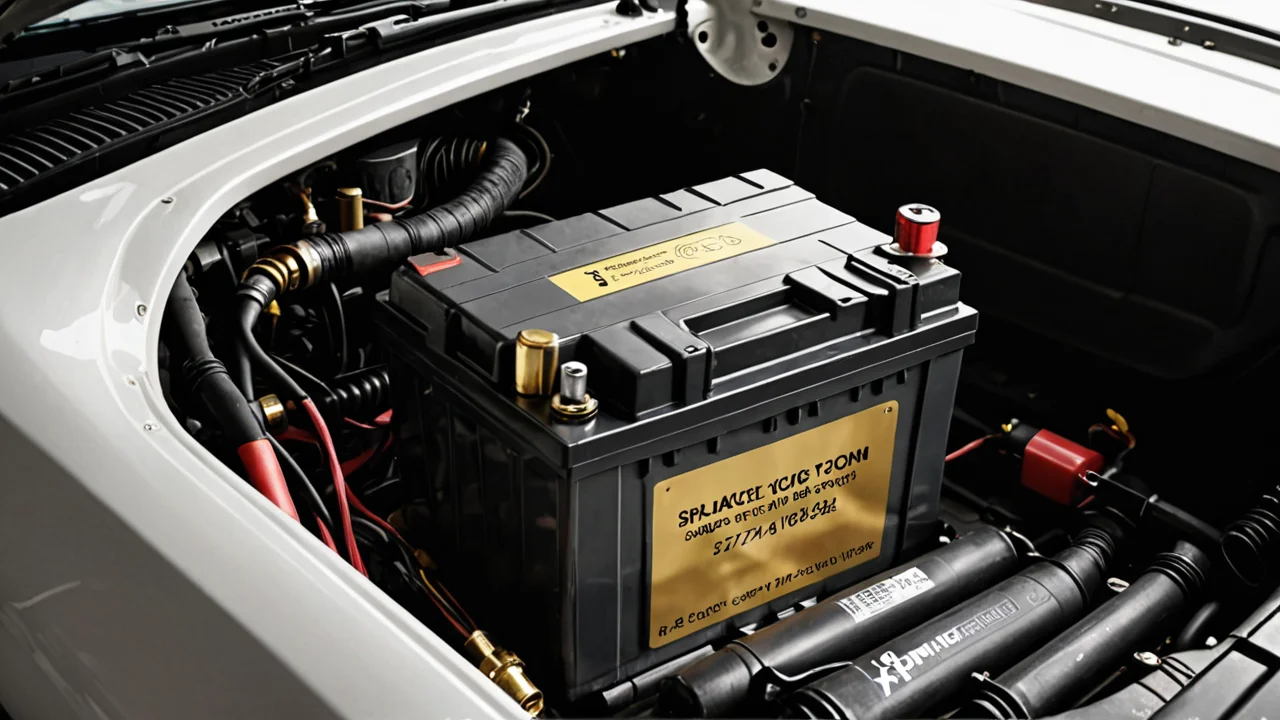
Test the battery before it fails rather than after, especially as it ages and especially before winter. A battery that cranks slowly on a cold morning is on its way out, and the failure mode is a no-start in a parking lot at the worst possible moment. Most auto parts stores will load-test a battery for free; the test takes minutes and tells you whether you are buying yourself another season or a new battery. Corroded terminals — the white-green crust — clean up with a brush and are worth checking whenever you are under the hood.
Belts and hoses are the other cheap-inspection, expensive-failure items. A serpentine belt with glazing, cracks, or missing ribs is a roadside breakdown waiting to happen, and on many engines it drives the water pump and alternator, so its failure takes the cooling and charging systems with it. Hoses fail from the inside; squeeze them when cold and look for soft spots, bulging, or cracks at the clamps. The trade-off is that replacing a belt or hose that looks fine is spending money on a part that might have lasted another year — but the cost of the part and labor is trivial next to a tow and an overheated engine.
This is also where the seasonal rhythm lives. Before the first cold snap: battery test, coolant strength check, tire pressure (which drops as temperatures fall — a real effect, not a myth), and a look at the wipers and washer fluid rated for freezing temperatures. Before summer: cooling system check, tire condition for heat, and a look at the AC if it has been weak.
Cleaning and protecting the car is maintenance, not vanity
Wash the car regularly, and pay particular attention to the underside and wheel arches in winter if your roads are salted. Road salt and brine are the reason older cars have rusted rocker panels and brake lines while the paint still looks fine. A rinse of the underbody costs little; a brake line that rusts through costs a great deal and is a safety failure, not a cosmetic one. Wash after the salt, not just before.
Paint protection is a spectrum, and the honest ranking is: clean and waxed beats clean and unwaxed, which beats dirty. A wax or sealant layer slows contamination and makes washing easier; a ceramic coating lasts longer and costs much more, and it does not make the car self-cleaning — you still wash it. Paint protection film is for people who care about stone chips on a car they plan to keep or resell, and it is expensive enough that it rarely makes sense on an ordinary daily driver. The wrong choice is spending on a coating while neglecting the wash, because the coating's whole job is to be a sacrificial layer over clean paint.
Interior care is mostly about the surfaces that crack and the ones that wear. UV exposure destroys dashboards and leather over years; a sunshade and a protectant do more than any single deep clean. Floor mats and seat covers are cheaper than the carpets and upholstery underneath them. None of it is urgent, which is exactly why it gets skipped, and the cumulative cost of skipping it shows up as a car that looks tired long before it drives tired.
When to do it yourself, when to pay, and when to stop
Do it yourself: tire pressure and inspection, fluid level checks, wiper blades, air and cabin filters, battery terminal cleaning, bulbs, and washing. These are low-risk, need no special tools, and get you physically close to the car, which is how you notice the things that are about to go wrong. Pay a professional: brakes, suspension, alignment, anything involving the cooling system under pressure, transmission service, and diagnosis of a check-engine light. The trade-off is not just skill — it is tools, a lift, torque specs, and the consequence of getting it wrong. A brake job done badly is a safety problem, not a saving.
The harder decision is when to stop spending. A car needs a mental ledger: what it is worth, what it needs this year, and what it will need next. A single large repair on a car with plenty of life left is usually worth it; a cascade of repairs on a car with structural rust or a failing transmission is often money into a hole. The tipping point is not a number — it is the point where the next repair costs more than the car's remaining useful life is worth to you. That is a judgment about your situation, not a rule, and it is worth making before the shop calls with the estimate rather than in the moment.
Maintenance records are the quiet multiplier on all of this. A car with documented fluid changes, tire rotations, and repairs is worth more and sells faster than an identical one with a glovebox full of mystery receipts. Keep a folder or a phone note; it costs nothing and it is the difference between a buyer trusting you and a buyer walking away.
The order of operations, and what each choice costs
If you do nothing else, do the tires: set them to the placard psi, check cold, monthly. That single habit protects the most expensive consumable on the car and the one most directly tied to whether you stop in time. Everything else layers on top of it.
| Task |
Frequency |
Do it yourself? |
Cost of skipping |
| Tire pressure to placard psi (cold) |
Monthly and before long trips |
Yes |
Uneven wear, worse economy, longer stops |
| Oil and filter |
Manual interval, sooner on short-trip duty |
Yes, with ramps and a drain pan |
Sludge, premature engine wear |
| Coolant and brake fluid |
Manual interval; level checks regularly |
Level checks yes; replacement usually no |
Corrosion, boiling brake fluid, overheating |
| Brake pads and rotors |
At the wear indicator; inspect at every tire change |
No, unless experienced |
Grinding, longer stops, rotor damage |
| Battery load test |
As it ages, and before winter |
Free at many parts stores |
No-start at the worst moment |
| Belts and hoses |
Inspect when cold, replace on condition |
Sometimes; tight access on many engines |
Roadside breakdown, collateral damage |
| Wash and underbody rinse |
Regularly, especially after road salt |
Yes |
Rust on panels and brake lines |
| Wax, sealant, or coating |
Per product; wax more often than coating |
Yes |
Contamination, faded paint, harder washes |
The costs are not only money. Checking tire pressure takes a few minutes a month. An oil change you do yourself takes an afternoon the first time and less thereafter, and it saves labor but costs you the disposal of the old oil and the risk of a stripped drain plug. Paying a shop costs more but buys you a lift, a torque wrench, and somebody else's liability if it goes wrong. The right split depends on your tools, your time, and how much you enjoy the work — and it is fine for that split to change as the car ages and the jobs get bigger.
What ties it together is that almost none of this is about a single dramatic repair. It is a set of small, boring, repeatable checks — pressure, levels, wear, corrosion — done often enough that the car never surprises you. The drivers who spend the least on cars over ten years are rarely the ones who know the most about engines. They are the ones who check the tires on the first of the month and rinse the salt off in February.